
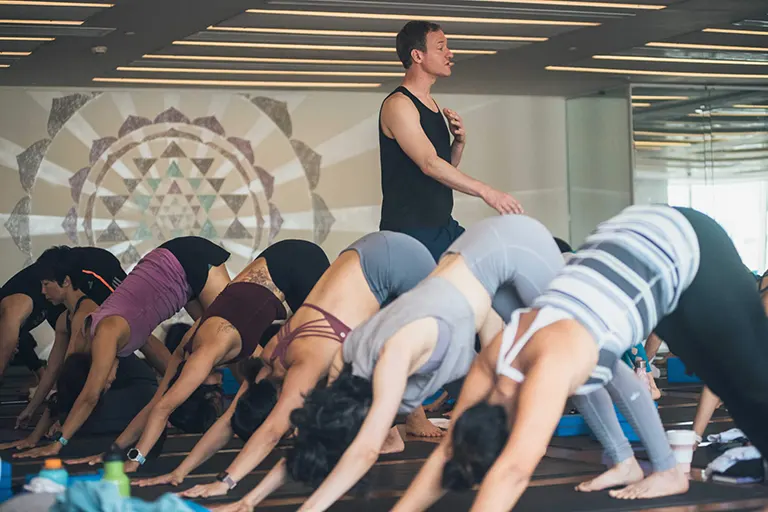

Yoga has evolved from an ancient spiritual discipline into a global movement practice embraced by millions of people seeking physical mobility, stress reduction, and mental clarity. However, the commercialization of modern yoga has frequently presented a narrow, uniform image of the practice. Mainstream media, advertising campaigns, and studio marketing often portray yoga practitioners as exclusively young, hyper-flexible, able-bodied, and affluent.
This pervasive cultural framing creates significant psychological and physical barriers for prospective students who do not fit that narrow archetype. When beginners enter a studio and encounter unfamiliar Sanskrit terminology, athletic gatekeeping, or rigid alignment demands, they frequently feel alienated and intimidated. A truly dedicated yoga teacher recognizes that the practice is not about forcing bodies into idealized shapes; it is about adapting the shapes to serve individual human bodies. Cultivating an inclusive and welcoming environment requires intentional communication, thoughtful space curation, anatomical adaptability, and trauma-informed instruction.
Deconstructing the Aesthetic Paradigm of Modern Yoga
To build an inclusive yoga space, instructors must first examine and dismantle the unconscious biases that shape contemporary teaching styles.
Moving Beyond Performative Postures
Traditional yoga philosophy treats physical postures, or asanas, as steady and comfortable seats for meditation and self-inquiry. In contrast, modern fitness-oriented yoga frequently treats postures as aesthetic accomplishments to be perfected and showcased. When teachers praise only the students who achieve deep backbends or advanced arm balances, they inadvertently send a message that physical flexibility equates to spiritual or technical progress.
Inclusive teaching shifts the focus from how a posture looks on the outside to how it feels on the inside. This interoceptive approach encourages students to explore sensation, manage their nervous systems, and honor their personal boundaries rather than chasing extreme ranges of motion that may be anatomically unsuitable for their skeletal structures.
Recognizing Diverse Skeletal Variation
Every human skeleton possesses unique structural variations in bone shape, joint socket depth, and ligamentous laxity. For example, the angle and depth of the femoral neck within the acetabulum dictate how far a person can comfortably abduct their hips in postures like Warrior II or Baddha Konasana.
No amount of muscular stretching can alter direct bone-on-bone contact. Instructors who insist on universal alignment rules risk injuring their students and creating feelings of inadequacy. Welcoming teachers educate students on skeletal diversity, normalizing that every body will, and should, express postures differently.
Thoughtful Language and Inclusive Verbal Cues
The words an instructor chooses during a sixty-minute class have a profound impact on student safety, autonomy, and emotional comfort.
Replacing Hierarchical Framing with Neutral Options
Many traditional yoga cues inadvertently create hierarchies of ability. Phrases like “if you want a challenge” or “if you are a beginner, stay here” imply that the modified posture is inferior and that the full expression represents true success.
Inclusive instructors use neutral, exploratory language that gives equal value to every variation:
-
Use “Option A, Option B, and Option C” rather than labeling movements as beginner, intermediate, or advanced
-
Replace commands with invitations, using phrases like “you might explore” or “when you are ready”
-
Emphasize the functional purpose of a pose, such as “we are looking for a stretch along the side of the ribs,” allowing students to adjust their bodies until they find that specific sensation
-
Frame the use of resting postures, like Child’s Pose or Mountain Pose, as powerful demonstrations of body awareness rather than signs of fatigue or surrender
Body-Neutral and Non-Judgmental Language
In an inclusive studio, language should celebrate functional capability rather than aesthetic appearance or weight management. Teachers should avoid framing yoga as a method to burn off calories, earn a meal, or alter physical appearance. Comments regarding body shape, weight, or muscle definition can trigger distress in individuals managing eating disorders or body dysmorphia. Focusing strictly on breath control, strength, mental calm, and joint mobility creates a safe, affirming space for all participants.
Normalizing the Universal Use of Props
Yoga props, including foam and cork blocks, woven straps, bolsters, blankets, and folding chairs, are often misunderstood by practitioners as crutches reserved strictly for injured or inflexible students. An inclusive teacher actively demystifies and elevates the role of props in every class.
Integrating Props into General Sequencing
The most effective way to eliminate prop-related stigma is to make their usage the standard expectation for everyone in the room.
-
Instruct every student to gather two blocks and a strap before class begins, regardless of experience level
-
Demonstrate advanced applications of props, showing how a block can increase hamstring engagement, stabilize the pelvis, or bring the floor closer to the hands in standing balances
-
Cue prop placement directly into the foundational instructions of a sequence rather than offering them as an afterthought for struggling students
-
Keep studio prop storage areas clean, accessible, and well-stocked so students do not feel self-conscious searching for gear
Introducing Chair Yoga and Wall Support
A truly welcoming yoga studio provides movement pathways for individuals who cannot easily transition up and down from the floor. Offering dedicated chair yoga classes or providing seamless chair adaptations during a standard vinyasa class opens the practice to seniors, individuals recovering from surgeries, and practitioners with chronic vertigo or mobility limitations. Similarly, utilizing wall space for balance support removes the fear of falling and allows students to focus on breath and stability.
Fostering Physical and Psychological Safety
Creating an environment where students feel secure requires strict attention to personal boundaries, trauma awareness, and informed consent.
Re-Evaluating Hands-On Adjustments and Consent
Uninvited physical touch can be deeply jarring and can trigger severe anxiety in survivors of trauma. The traditional model, where teachers walk the room manually manipulating students into poses without explicit consent, is increasingly recognized as problematic.
Inclusive spaces establish clear consent mechanisms:
-
Use Physical Consent Tokens: Place two-sided consent cards or chips at the corner of each student mat, allowing individuals to indicate quietly whether they welcome hands-on adjustments that day.
-
Normalize Changing One’s Mind: Remind students that consent is fluid and that they are free to flip their token or decline touch at any point during class without explanation.
-
Prioritize Verbal Cues First: High-level verbal instruction and physical modeling teach students how to adjust their own bodies, cultivating internal body awareness rather than reliance on external touch.
-
Ask Before Entering Personal Space: Even with consent cards, a respectful teacher asks for quiet confirmation before making physical contact and explains what the touch is intended to support.
Structuring a Trauma-Informed Environment
Trauma-informed yoga principles benefit every student in the room by reducing nervous system hyperarousal. Simple environmental adjustments create a sense of grounding:
-
Avoid walking quietly behind students while they have their eyes closed in resting postures
-
Keep ambient room lighting soft and avoid complete darkness, which can cause disorientation or anxiety for some individuals
-
Keep studio music at a moderate volume that does not compete with your voice, ensuring cues are clear and easy to follow
-
Ensure pathways between mats remain clear and unobstructed to maintain an open, unconfined room feel
Financial, Cultural, and Demographic Accessibility
True inclusivity extends beyond teaching mechanics and addresses the systemic barriers that prevent diverse populations from accessing yoga studios in the first place.
-
Implement Tiered and Community Pricing: Offer sliding-scale payment options, community donation-based classes, and work-exchange programs to ensure that financial constraints do not exclude dedicated practitioners.
-
Represent Diverse Leadership: Actively recruit, train, and support teachers of diverse body sizes, racial backgrounds, gender identities, and physical abilities to ensure the teaching roster reflects the broader community.
-
Provide Clear Class Descriptions: Write transparent, plain-language website descriptions that clearly outline the physical demands, temperature, pace, and sound levels of each class so students can choose the right session for their needs.
-
Ensure Facility Accessibility: Verify that your studio space is fully ADA-compliant, with wheelchair-accessible entrances, gender-neutral restrooms, wide doorways, and scent-free policies for individuals with chemical sensitivities.
Sustaining the True Heart of Yoga
Yoga is, at its core, a practice of union, self-discovery, and compassion. When yoga teachers dismantle performance-based expectations, adopt empowering language, normalize support props, and honor student autonomy, they transform their classrooms into genuine sanctuaries of wellness. Creating an inclusive environment is an ongoing, reflective discipline that requires continuous learning and humble listening. By opening the doors of the practice to every body, yoga teachers fulfill the true promise of the tradition, ensuring that its healing benefits are accessible to all.
Frequently Asked Questions
How can a yoga teacher make Sanskrit terms welcoming to absolute beginners?
A teacher can make Sanskrit accessible by always pairing the traditional term with its clear English translation and anatomical purpose. For example, introduce a pose by saying, “Adho Mukha Svanasana, or Downward-Facing Dog, where we lengthen the spine and press through the palms.” Explaining the cultural origin and philosophical meaning behind key terms during class demystifies the language and honors the roots of the tradition without overwhelming newcomers.
What is the best way to handle a student who experiences an emotional release during class?
Emotional releases, including unexpected crying or shaking, are natural as the nervous system unwinds and physical tension leaves the body. The teacher should maintain a calm, non-judgmental presence, avoid making a public spectacle of the student, and quietly bring a tissue or blanket if appropriate. Ensure the student knows they are safe, free to step outside, or welcome to rest in any comfortable posture for the remainder of class without feeling self-conscious.
How can teachers adapt fast-paced vinyasa classes for students with chronic wrist pain?
Instructors can cue fist-for-wrist alignment, suggest the use of wedge blocks to reduce the angle of extension at the wrist joint, or offer forearm variations for postures like Plank and Dolphin Pose. Furthermore, teachers can demonstrate standing variations of sun salutations using a wall or a sturdy chair, eliminating all direct compressive weight on the wrists.
Why is room temperature an important consideration for inclusive yoga spaces?
Excessive room heat can be dangerous for individuals managing cardiovascular conditions, multiple sclerosis, pregnancy, or autonomic dysfunction like POTS. While heated yoga has its place, studios should balance their schedules with non-heated, climate-controlled classes and clearly label room temperatures on all schedules so practitioners can make safe choices.
How can an instructor support students who are deaf or hard of hearing?
Teachers should position themselves where their face and mouth are clearly visible under good lighting, demonstrate postures physically rather than relying solely on off-mat verbal pacing, and use intentional visual cues. Providing printed sequence overviews, turning on closed captioning for hybrid digital streams, and reducing background music volume ensures clear communication.
What steps should a teacher take if a student expresses discomfort with hands-on adjustments after class?
The teacher should listen with open, non-defensive empathy, thank the student for their honesty, and apologize sincerely for the discomfort caused. The instructor should document the student’s preference in their internal notes, reaffirm that the student’s boundaries are fully respected, and use the interaction as a valuable learning experience to refine their consent protocols moving forward.
How does an instructor manage mixed-level classes without leaving beginners behind or boring experienced students?
The most effective strategy is layered teaching. The instructor introduces the base foundation of the posture first, ensuring alignment and stability for everyone, and then offers optional layers of depth, balance, or bind variations. This framework allows beginners to feel successful in the primary posture while giving advanced students clear avenues to explore greater challenge if they choose.

Comments are closed.