
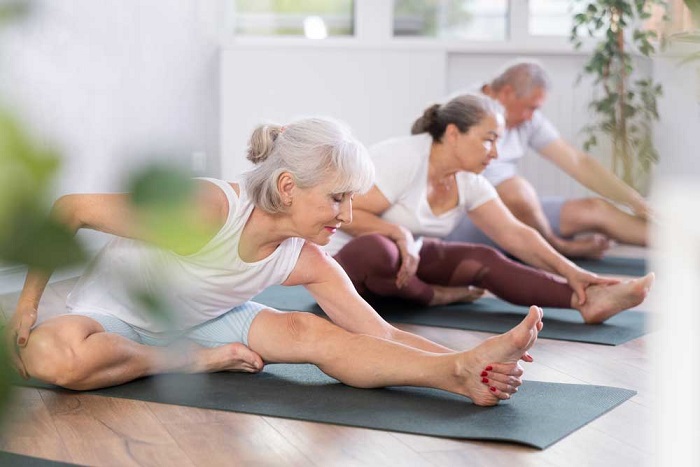

Aging brings natural biological changes that alter how the human body moves, stabilizes, and responds to environmental challenges. Among the most critical health concerns facing older adults is the loss of equilibrium, which significantly increases the incidence of accidental falls. According to public health data, falls represent the leading cause of fatal and non-fatal injuries among individuals aged sixty-five and older, often resulting in hip fractures, head traumas, and a severe loss of independent mobility.
While balance degradation is a common aspect of aging, it is not an inevitable outcome of getting older. Balance is a complex, trainable neuromuscular skill that relies on the harmonious interaction of sensory systems, muscle strength, joint mobility, and cognitive processing. Yoga has emerged as one of the most effective, evidence-based practices for preserving and restoring these critical systems. Through a combination of static postures, dynamic transitions, breathwork, and mindful body awareness, yoga offers a comprehensive framework for mitigating fall risk, reinforcing physical resilience, and fostering confidence during the aging journey.
The Physiology of Balance Degradation in Older Adults
To understand how yoga preserves stability, one must first examine the physiological systems responsible for maintaining balance and how aging affects them.
Human equilibrium is governed by the postural control system, which integrates sensory input from three primary sources: the vestibular system within the inner ear, the visual system, and the somatosensory system, particularly proprioception. Proprioception refers to the body ability to sense its position, motion, and equilibrium in space through specialized mechanoreceptors located in muscles, tendons, and joint capsules.
As the body ages, several degenerative processes occur:
-
Sarcopenia and Muscle Atrophy: Natural loss of skeletal muscle mass and functional strength, particularly in the lower extremities and core stabilizing muscles, impairs the ability to catch oneself during a stumble.
-
Reduced Proprioceptive Sensitivity: Mechanoreceptors in the feet and ankles decline in density and responsiveness, delaying the neurological signal that alerts the brain to an uneven surface.
-
Slower Reaction Times: Synaptic transmission and neuromuscular firing rates decelerate, slowing the reflexive postural adjustments required to prevent a full fall after a loss of balance.
-
Joint Stiffness and Decreased Mobility: Chronic conditions such as osteoarthritis and reduced synovial fluid production restrict range of motion in the ankles, hips, and spine, limiting the body capacity to execute corrective steps.
-
Psychological Fear of Falling: Previous slips or near-misses create fear-avoidance behavior, leading older adults to restrict their physical activity. This sedentary behavior accelerates physical decline and ironically increases future fall risk.
How Yoga Targets the Root Causes of Fall Risk
Yoga addresses balance deficits through a multi-system approach that engages the muscular, skeletal, nervous, and cognitive systems simultaneously.
Strengthening Lower Body and Core Stabilizer Muscles
Traditional fitness regimens often focus on large, prime-mover muscle groups like the quadriceps or chest. In contrast, yoga emphasizes the recruitment of deep, smaller stabilizer muscles that maintain joint integrity and posture.
Standing yoga postures require continuous isometric contractions and micro-adjustments from the intrinsic muscles of the feet, the anterior tibialis and gastrocnemius in the lower legs, the gluteal complex, and the transverse abdominis. By strengthening the foundational base of support, yoga provides older adults with the physical power needed to stabilize their center of gravity over their base of support during everyday tasks.
Enhancing Proprioception and Spatial Awareness
Every yoga posture demands conscious awareness of limb placement, weight distribution, and alignment. Poses that challenge stability force mechanoreceptors in the soles of the feet and ankles to send rapid sensory feedback to the central nervous system.
Over time, this deliberate mindful practice rebuilds neural pathways, sharpening the brain ability to interpret proprioceptive signals. When an individual steps on an uneven sidewalk or transitions between carpet and hardwood flooring, their nervous system detects the subtle change instantly and activates the appropriate corrective muscles.
Restoring Ankle, Hip, and Spinal Mobility
Rigid joints restrict natural gait mechanics and prevent the fluid execution of the ankle strategy and hip strategy, which are the body primary biomechanical reactions to balance disturbances.
Yoga postures gently take joints through their full physiological range of motion:
-
Ankle dorsiflexion and plantarflexion are improved through lunges and downward-facing postures, preventing foot drop and tripping.
-
Hip flexibility is restored through gentle hip openers, allowing for wider, more stable compensatory steps when balance is compromised.
-
Spinal extension and rotation postures decompress intervertebral spaces, counteracting age-related hyperkyphosis (excessive forward curvature of the upper back) that shifts the center of mass dangerously forward.
Calming the Nervous System and Eliminating Fear-Avoidance
The mindful, breath-centered nature of yoga downregulates the sympathetic nervous system and activates the parasympathetic relaxation response. By practicing challenging balance postures in a controlled, supportive environment, older practitioners experience safe, manageable instability.
This process desensitizes the autonomic fear response, builds genuine movement competence, and breaks the vicious cycle of fear-induced physical restriction. Older adults regain the confidence to walk outdoors, climb stairs, and participate in social activities without debilitating anxiety.
Foundational Yoga Postures for Balance and Stability
A well-rounded yoga routine for older adults incorporates postures that target different aspects of stability, from foundational foot grounding to dynamic weight shifting.
Mountain Pose (Tadasana)
Although it appears simple, Mountain Pose is the cornerstone of standing posture and alignment.
-
Stand with feet hip-width apart, distributing weight evenly across the four corners of each foot: the base of the big toe, the base of the little toe, the inner heel, and the outer heel.
-
Engage the quadriceps lightly and align the pelvis in a neutral position.
-
Roll the shoulders back and down, lengthening the spine toward the ceiling with the arms resting at the sides.
-
Focus on a stationary point ahead and practice closing the eyes for brief five-second intervals to challenge the vestibular and somatosensory systems.
Tree Pose (Vrksasana) with Wall or Chair Support
Tree Pose builds unilateral leg strength and stimulates the mechanoreceptors of the standing foot.
-
Stand tall next to a sturdy wall or the back of a stable chair for hand support.
-
Shift body weight onto the right foot, spreading the toes wide on the floor.
-
Place the sole of the left foot against the right inner ankle, calf, or inner thigh, avoiding direct pressure against the side of the knee joint.
-
Maintain an upright posture while engaging the core and standing glute.
-
Hold for twenty to thirty seconds while breathing steadily, then repeat on the opposite side.
Warrior II (Virabhadrasana II)
Warrior II builds isometric strength in the lower limbs, improves hip mobility, and broadens the base of support.
-
Step the feet wide apart, turning the right foot forward and the left foot slightly inward.
-
Bend the right knee until it aligns directly over the right ankle while keeping the back leg straight and strong.
-
Extend the arms parallel to the floor at shoulder height, gazing calmly over the front fingertips.
-
Hold for fifteen to thirty seconds, maintaining an engaged core to stabilize the torso, then switch sides.
Cat-Cow Sequence (Marjaryasana-Bitilasana)
Performed on hands and knees or while seated in a chair, this flowing movement synchronizes breath with spinal mobility.
-
In a tabletop or seated position, inhale while dropping the belly slightly, lifting the chest, and looking forward (Cow Pose).
-
Exhale while rounding the spine toward the ceiling, tucking the chin gently toward the chest, and drawing the navel inward (Cat Pose).
-
Repeat smoothly for ten to twelve breath cycles to mobilize the thoracic spine and reduce postural rigidity.
Adapting Yoga for Safety: Props, Chairs, and Modifications
Inclusivity and safety are paramount when designing yoga practices for aging populations. Practicing yoga should never involve reckless risk-taking; rather, it should use thoughtful modifications that meet the practitioner where they are.
-
Chair Yoga: For individuals with advanced osteoporosis, severe balance impairments, or joint replacements, chair yoga provides all the neuromuscular benefits of traditional yoga without the risk of falling to the floor. Poses like seated twists, forward folds, and seated leg extensions build functional mobility from a secure, stable platform.
-
Wall and Prop Integration: Utilizing foam blocks, yoga straps, and sturdy walls allows practitioners to explore balance postures safely. Having light fingertip contact with a wall while practicing single-leg balances provides the nervous system with external reference cues while still forcing the stabilizer muscles to work.
-
Floor Transitions: For those capable of floor work, practicing deliberate, structured transitions from standing down to the mat and back up builds essential floor recovery skills, a vital protective ability in the event a fall does occur.
Designing a Sustainable Routine for Long-Term Balance
Consistency is the single most important factor in maintaining neuromuscular gains. The neurological adaptations that govern balance begin to diminish within weeks of physical inactivity.
To achieve lasting improvements:
-
Practice Regularly: Aim for fifteen to twenty minutes of focused balance and mobility yoga four to five days a week, rather than a single exhausting weekly class.
-
Integrate Balance into Daily Life: Practice standing in Mountain Pose while brushing your teeth, or perform supported single-leg balance holds while waiting for water to boil.
-
Listen to Pain Signals: Distinguish between the healthy muscular engagement of holding a posture and sharp, pinching, or shooting joint pain. Modify or exit any pose that triggers joint discomfort immediately.
-
Prioritize Nasal Breathing: Maintain slow, deep diaphragmatic breathing through the nose throughout the practice. Smooth breathing regulates heart rate, maintains blood oxygenation, and prevents the breath-holding that causes dizziness in older adults.
Reclaiming Independence Through Mindful Movement
Aging does not have to mean a slow, inevitable loss of physical stability. Balance is a dynamic capacity that responds rapidly to deliberate, consistent training. By strengthening the stabilizing musculature of the lower body, sharpening proprioceptive awareness, restoring joint flexibility, and dispelling the psychological fear of falling, yoga provides older adults with a reliable pathway toward lifelong mobility. Embracing this gentle yet powerful practice empowers individuals to navigate their physical environments with confidence, grace, and enduring independence.
Frequently Asked Questions
How long does it take for an older adult to see balance improvements from practicing yoga?
Clinical studies show that older adults who practice balance-focused yoga for twenty to thirty minutes two to three times per week typically demonstrate measurable improvements in postural stability, single-leg stance duration, and functional gait within eight to twelve weeks.
Is practicing yoga safe for individuals diagnosed with osteoporosis?
Yes, provided specific modifications are made. Individuals with osteoporosis or low bone mineral density must avoid deep spinal flexion (such as aggressive forward bends) and rapid, forceful spinal twists, as these movements place excessive compressive stress on weakened vertebral bodies. Gentle extension poses, supported standing postures, and isometric strengthening exercises are generally safe and help stimulate bone retention.
Can someone who cannot stand for long periods still benefit from yoga for balance?
Absolutely. Seated chair yoga exercises and supported floor work strengthen the core, improve spinal mobility, and enhance upper body postural alignment, all of which are essential components of the balance control system. Additionally, practicing supported sit-to-stand transitions from a chair directly builds the lower-body power required for walking stability.
What should an older adult look for when choosing a yoga class or instructor?
Look for certified instructors with specialized training in Gentle Yoga, Chair Yoga, Senior Fitness, or Yoga Therapy. Qualified instructors understand age-related anatomical changes, know how to integrate props effectively, avoid high-risk postures, and create an encouraging, non-competitive environment.
How does proper breathing in yoga directly influence balance?
Diaphragmatic breathing stabilizes the intra-abdominal cavity, which supports the lumbar spine and pelvic floor. Furthermore, controlled breathing prevents hyperventilation and the Valsalva maneuver (holding the breath during exertion), both of which can cause sudden fluctuations in blood pressure that lead to lightheadedness and balance loss.
Can yoga help an older person recover more safely if a fall does occur?
Yes. Yoga builds joint flexibility, core strength, and spatial awareness, which can help an individual roll or absorb impact more evenly during a slip rather than landing rigidly. Additionally, practicing ground-to-standing movement sequences builds the upper-body and leg strength needed to get up from the floor independently after a fall.
Is it normal to feel wobbly when starting balance postures in yoga?
Wobbling is a completely normal, healthy physiological response known as postural sway. Postural sway indicates that the nervous system and deep stabilizer muscles are actively firing and making micro-adjustments to keep the body upright. Over time, as neuromuscular coordination improves, the degree of sway naturally decreases.

Comments are closed.