
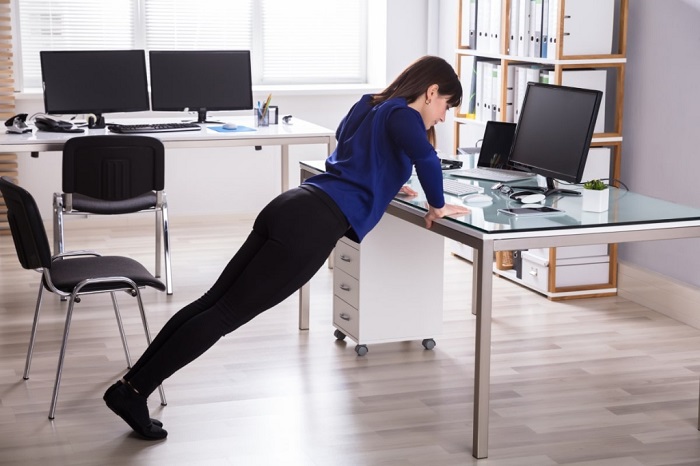

Modern professional work environments require millions of people to spend eight to ten hours a day seated in front of computer monitors. While digital connectivity has revolutionized workplace productivity, prolonged sedentary behavior places severe biomechanical stress on the human body. Extended periods of sitting tighten hip flexors, weaken posterior chain muscles, strain cervical vertebrae, and reduce overall systemic circulation.
The resulting aches, often characterized by rounded shoulders, chronic lower back tension, and repetitive strain discomfort, are not inevitable consequences of office work. By integrating targeted, anatomically sound movement routines into daily working hours, desk-bound professionals can counteract postural deterioration, protect joint health, and sustain high energy levels. A proactive fitness approach tailored for desk workers does not require hours in a commercial gym; rather, it relies on strategic exercises that reverse the specific physical constraints of static sitting.
The Biomechanical Toll of Prolonged Sitting
To correct the physical issues caused by desk work, one must first understand what occurs anatomically during extended seated postures.
When an individual sits for hours, the hip flexors remain in a shortened, contracted state. Over time, this chronic shortening causes anterior pelvic tilt, pulling the pelvis forward and placing excessive compressive load on the lumbar spine. Simultaneously, the gluteal muscles experience prolonged relaxation and neurological inhibition, a condition often termed gluteal amnesia. Without active glute engagement, the lower back and hamstrings are forced to compensate during basic functional movements like standing and walking.
In the upper body, leaning forward toward screens causes forward head posture and internal shoulder rotation. For every inch the head migrates forward from its neutral cervical alignment, the relative gravitational load on the neck muscles increases significantly. This postural misalignment leads to tension headaches, upper trapezius stiffness, and restricted thoracic spine mobility.
Seated Mobility and Posture Correction Exercises
Desk workers do not need to wait until the workday ends to address physical tension. Several effective exercises can be performed directly in an office chair to maintain joint lubrication and relieve muscle tightness.
Seated Thoracic Spine Extensions
Sitting in a slouched position locks the mid-back into excessive flexion. Thoracic extensions help restore natural spinal curvature.
-
Sit upright on the edge of your chair with feet flat on the floor.
-
Interlock your fingers behind your head, keeping your elbows wide.
-
Inhale deeply and gently arch your upper back over the backrest of the chair, looking toward the ceiling.
-
Hold the extended position for three seconds, exhale, and return to neutral.
-
Perform 8 to 10 controlled repetitions.
Seated Figure-Four Piriformis Stretch
This stretch opens the deep external rotators of the hip, which tighten considerably during long seated sessions.
-
Sit tall with a neutral spine.
-
Lift your right ankle and rest it across your left knee, creating a figure-four shape with your legs.
-
Gently press down on the right knee while hinging forward at the hips with a flat back until you feel a moderate stretch in the right glute.
-
Hold the position for 20 to 30 seconds while breathing deeply, then repeat on the opposite side.
Seated Scapular Retractions
This movement activates the rhomboids and middle trapezius muscles, pulling the shoulder blades backward and counteracting rounded shoulders.
-
Sit away from the backrest with arms resting naturally at your sides.
-
Without shrugging your shoulders upward, pull your shoulder blades back and down as if squeezing a pencil between them.
-
Hold the peak contraction for five seconds, release smoothly, and repeat for 12 repetitions.
Standing Strength and Activation Drills
Breaking up sitting time with brief bouts of standing exercise restores blood flow, re-engages dormant muscle groups, and boosts alertness. These bodyweight movements require minimal space and no special equipment.
Desk-Supported Squats
Squats engage the quadriceps, hamstrings, and glutes, driving large volumes of oxygenated blood back to the brain and heart.
-
Stand in front of your desk with feet placed shoulder-width apart.
-
Rest your fingertips lightly on the edge of the desk for balance if needed.
-
Push your hips back and bend your knees, lowering your body until your thighs are parallel to the ground.
-
Drive through the heels to return to a standing position, actively squeezing the glutes at the top of the movement.
-
Complete 2 sets of 10 to 15 repetitions.
Standing Doorframe Pec Stretch
Internal shoulder rotation tightens the pectoralis major and minor muscles, which pulls the collarbones forward. Stretching these tissues allows the chest to open naturally.
-
Stand in an open doorway and raise one arm to a ninety-degree angle, resting your forearm against the doorframe.
-
Step forward slightly with one foot until you feel a gentle stretch across the front of your chest and shoulder.
-
Keep your core braced to avoid over-arching your lower back.
-
Hold for 30 seconds on each side.
Standing Calf Raises with Ankle Mobilization
The lower leg muscles serve as a secondary pump for venous blood return. Elevating the heels activates the gastrocnemius and soleus muscles, reducing fluid accumulation in the lower limbs.
-
Stand tall behind your desk or chair with hands resting lightly on the surface.
-
Rise onto the balls of both feet, elevating your heels as high as possible.
-
Pause briefly at the top, then lower your heels back to the floor under control.
-
Perform 15 to 20 continuous repetitions.
Floor-Based Decompression for Home or Break Rooms
For those who work remotely or have access to a wellness room, floor-based exercises provide deep spinal decompression and core activation that cannot be replicated in a chair.
The Bird-Dog Drill
This core-stabilization exercise builds endurance in the erector spinae and gluteal muscles without placing compressive loads on the lumbar vertebrae.
-
Begin on all fours with hands directly below shoulders and knees below hips.
-
Keep your neck neutral by gazing at the floor between your hands.
-
Simultaneously reach your right arm straight forward and kick your left leg straight back until both are parallel to the floor.
-
Hold the extended position for two seconds, ensuring your hips remain level and do not rotate.
-
Return to the starting position and repeat with the opposite arm and leg for 10 repetitions per side.
The Half-Kneeling Hip Flexor Stretch
This is one of the most vital movements for desk workers, as it directly lengthens the psoas and rectus femoris muscles.
-
Kneel on one knee with the opposite foot planted flat in front of you, forming ninety-degree angles with both legs.
-
Tuck your tailbone under slightly by engaging your glutes and drawing your navel in.
-
Shift your weight forward a few inches until a deep stretch is felt along the front of the hip on the trailing leg.
-
Avoid arching your lower back.
-
Hold for 30 seconds per side.
Designing a Seamless Daily Movement Workflow
Implementing an effective physical activity routine during the workday does not require complex scheduling. It requires habit stacking and structured micro-breaks.
-
The Fifty-Ten Rule: Work focused for fifty minutes, then dedicate ten minutes to standing, stretching, and performing two brief exercises.
-
Hydration-Linked Movement: Every time you finish a glass of water, stand up to refill it and complete ten air squats or calf raises before sitting down.
-
Dynamic Phone Calls: Take voice calls while standing or pacing rather than sitting statically.
-
Ergonomic Auditing: Position your monitor at eye level, keep your elbows at ninety degrees, and ensure your lower back has supportive lumbar contact.
Long-Term Health Benefits of Desk-Friendly Fitness
Addressing the physical demands of desk work through regular, deliberate exercise transforms your overall physical resilience. By activating dormant muscle chains, lengthening chronically shortened connective tissues, and encouraging healthy cardiovascular circulation, desk workers can eliminate persistent musculoskeletal pain. Consistent daily movement protects long-term spinal integrity, enhances cognitive focus, and ensures that professional productivity does not come at the expense of physical wellbeing.
Frequently Asked Questions
Can using a standing desk entirely replace the need for physical exercise?
A standing desk helps reduce total seated time, but standing statically for hours introduces its own set of issues, including lower back fatigue and varicose vein development. The true antidote to sedentary strain is dynamic movement and position variation, alternating between sitting, standing, and active stretching throughout the day.
What is the most effective exercise to relieve neck tension caused by looking at monitors?
Chin tucks are exceptionally effective. Sit upright, look straight ahead, and gently pull your chin inward as if making a double chin, without tilting your head down. Hold for three seconds and release. This strengthens the deep cervical flexors and decompresses the suboccipital muscles at the base of the skull.
How often should a desk worker get up and move during the workday?
Physical therapy guidelines suggest changing positions or standing up every thirty to sixty minutes. Even a brief ninety-second break to walk across the room, roll the shoulders, or stretch the hip flexors prevents joint stiffness and resets postural alignment.
Are under-desk walking treadmills beneficial for long-term health?
Under-desk treadmills provide substantial cardiovascular and metabolic benefits by increasing non-exercise activity thermogenesis and preventing glucose spikes after meals. However, users should maintain low speeds to avoid compromising their typing ergonomics or straining their lower back.
How does sitting all day affect core strength and abdominal muscles?
When seated, the abdominal wall and pelvic floor muscles relax completely, losing functional tone. Over time, this passive state weakens the natural muscular brace that supports the spine, making the lower back vulnerable to acute injury during everyday lifting or twisting movements.
What are the best stretches to prevent carpal tunnel syndrome and wrist strain from typing?
Perform prayer stretches and wrist extensor stretches. Place your palms together in front of your chest and slowly lower your wrists until you feel a stretch across the forearms. Next, extend one arm forward with the palm facing down, and use the other hand to gently pull the fingers downward toward the floor, holding each for twenty seconds.
Is it safe to perform desk exercises if an individual already experiences chronic lower back pain?
Low-impact mobility exercises like seated pelvic tilts, gentle glute bridges, and hip flexor stretches are generally beneficial for easing lower back tension. However, individuals experiencing sharp radiating pain, numbness, or diagnosed disc herniations should consult a physical therapist before initiating new movement routines.

Comments are closed.